The benefits of a robust ECM process for OEMs
"Change is the only constant in life." Heraclitus's line holds particularly true in engineering and product development. Every new product comes with the need for iterations, revisions, and adjustments — and how you manage those changes can be the difference between staying ahead and falling behind the competition. That's where Engineering Change Management (ECM) comes in. ECM is a core component of product data management: it ensures changes are integrated and executed seamlessly, without the confusion, delays, and unnecessary cost that tend to follow poorly managed change.
So what is ECM? It's a structured process for handling product updates, part revisions, and modifications throughout the product development lifecycle. It isn't just about tracking changes; it's about making sure every potential impact of a change is evaluated before implementation, and that all stakeholders are bought in and aligned. Done well, ECM is how you keep product development on course — ensuring the changes that need to be included are contributing to the programme rather than derailing it.
For OEMs, the benefits of a well-executed ECM process are substantial:
- Fewer release delays, because every change is properly vetted and approved.
- Lower risk of miscommunication between design, engineering, and manufacturing teams — the root cause of many costly mistakes and rework loops.
- Better collaboration, because everyone operates with the latest, most accurate product data. That eliminates confusion and keeps projects moving.
Our approach: Progressive Maturity in ECM
ECM matters throughout the entire product lifecycle. But it doesn't need to be a fully-fledged process during the concept phase — there are base-level requirements that should be met at every stage, and the process itself should mature with the product. We call this a Progressive Maturity Approach to ECM.
As the product matures, focus shifts from enabling rapid design iteration to supporting robustness and traceability. During concept, only a lightweight process for version control is needed. When you move to prototype and testing — the transition from digital to physical — formal ECM processes need to be in place. By the time your product goes into series production, every change needs careful planning, with lifetime cost impact and implementation plan factored in.

The key to effective ECM is being proactive rather than reactive. Anticipating and addressing potential issues early in the development cycle minimises the need for reactive changes and costly rework later. Robust data-quality monitoring and issue-management systems — identifying problems before they escalate — are what make that possible.
Shifting the peak workload of changes to the early stages of development is crucial. Data freeze deadlines, rigorous requirements change control, and planned release schedules based on milestones and features all help ensure issues are addressed before they become major roadblocks.
Beyond that: embrace agile workflows, well-structured change-management meetings, and data-driven decision-making. These practices let teams identify and address bottlenecks effectively, and automation plays a meaningful role in streamlining tasks and reducing errors — ultimately leading to faster development cycles and successful launches.
Our recommendation: implement a Minimum Viable Product for change management first, then work continuously to improve it. This gets a change-management process live quickly, supports ongoing improvement, and builds real ownership and responsibility inside the organisation.
Proactive strategies for effective change management
How do you know if your ECM process needs attention? Frequent project delays, unexpected costs, or quality issues appearing after changes are implemented are all clear signals. Miscommunication between teams, confusion over which design version is current, or recurring rework from poorly managed changes are the red flags. In an OEM environment, these issues cascade into massive disruption — affecting both time-to-market and bottom line.
Case studies: real-world success through effective ECM
QR_ works across a diverse portfolio spanning automotive, aerospace, defence, rail, and energy — from established global OEMs to burgeoning start-ups and small-scale luxury manufacturers. The experience and pattern recognition means we understand the unique challenges of each sector, regardless of business size.
Case study 1 — UK automotive OEM
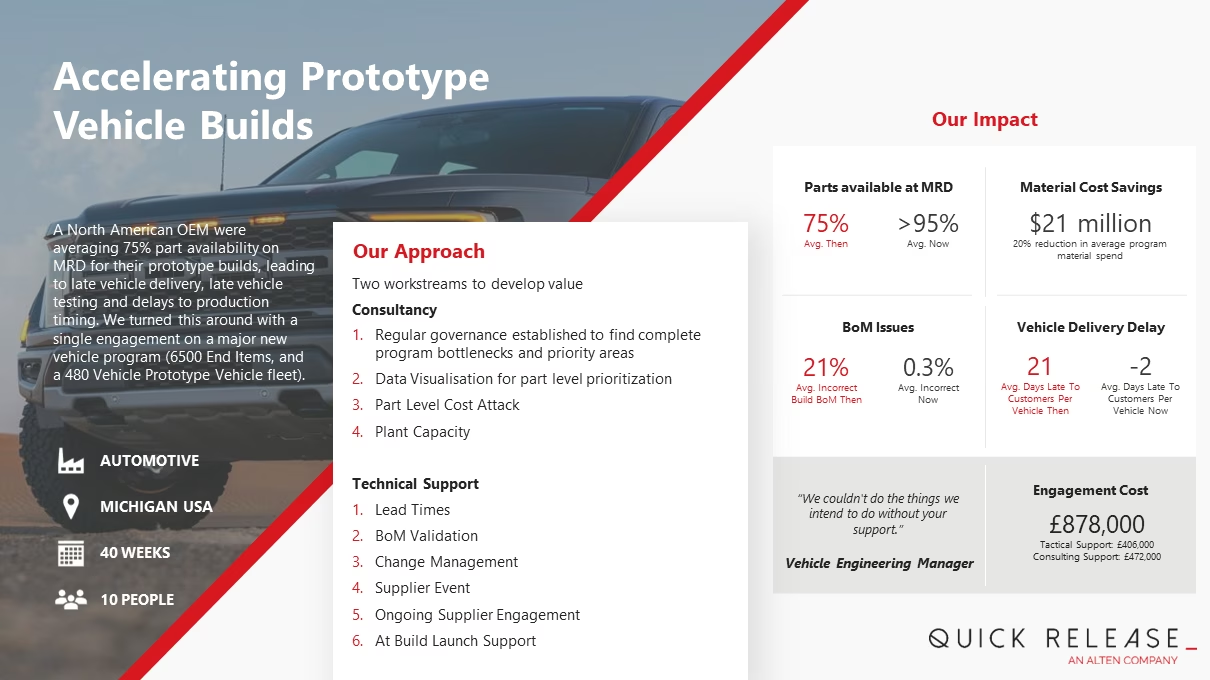
A UK automotive OEM was facing a critical situation with their new flagship product: a looming production launch delay. Engineering releases were stalled, supply chain issues were compounding the problem, and a projected 2-3 month slippage threatened to escalate costs, delay customer deliveries, and result in lost revenue.
QR_ intervened — prioritising the identification and removal of constraints. Consultancy services validated the scale of the required response, mapped processes to pinpoint bottlenecks, and implemented new visibility tools to track progress against target run rates. "At elbow" support to engineering teams cleared drawing backlogs and introduced drawing checklists. Release analysts gathered commitment dates for critical parts, prioritised change-management meetings, and deployed targeted escalation strategies to accelerate change throughput.
The results were decisive: ECM process approval days were reduced from an average of 64 days to 22 days, estimated material cost savings of $2.5 million were achieved, and the vehicle launch was accelerated by two months — avoiding the projected delay. Beyond the immediate programme, the intervention laid a foundation for cascading improvements to future programmes.
Case study 2 — North American OEM
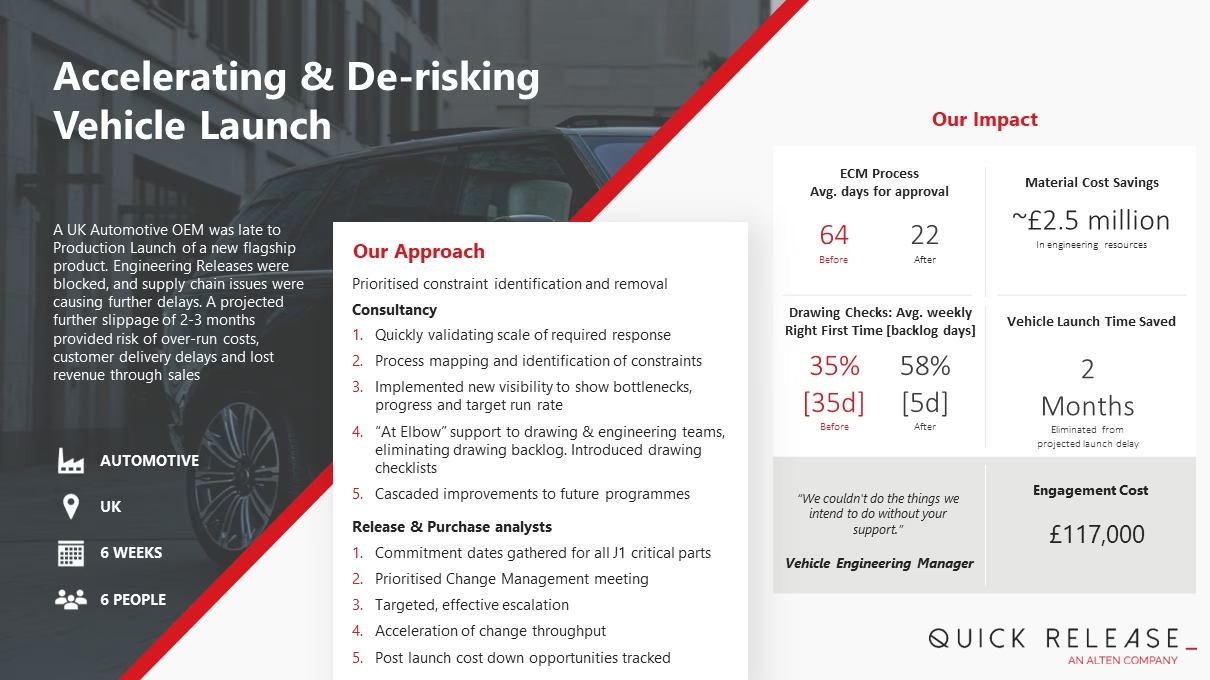
A North American OEM was facing significant challenges with part availability for their prototype builds, resulting in late vehicle deliveries, delayed testing, and production delays. With an average part availability of only 75%, the situation was a major concern on a programme involving 6,500 end items and a prototype fleet of 480 vehicles.
QR_ implemented a two-pronged approach. A consultancy team established regular governance to identify programme bottlenecks and priority areas, supporting data visualisation for part-level prioritisation and cost-analysis workstreams. In parallel, a technical support team focused on lead-time optimisation, BOM validation, change management, supplier engagement, and ongoing support through vehicle build launch.
The result was a dramatic improvement: estimated material cost savings of $21 million, part availability at the Material Release Date climbing from 75% to 95%, BOM issues drastically reduced, and average delivery delays cut from 21 days late to 2 days early.
Final thoughts
In the dynamic world of engineering and product development, effective Engineering Change Management isn't just good practice — it's a necessity. Done well, ECM ensures changes are seamlessly integrated and executed, avoiding the confusion, delays, and unnecessary costs that dog poorly managed programmes. A structured process for product updates, part revisions, and modifications is what empowers OEMs to realise the real benefits: reduced release delays, fewer communication errors, better collaboration, and a materially more efficient product development process.